
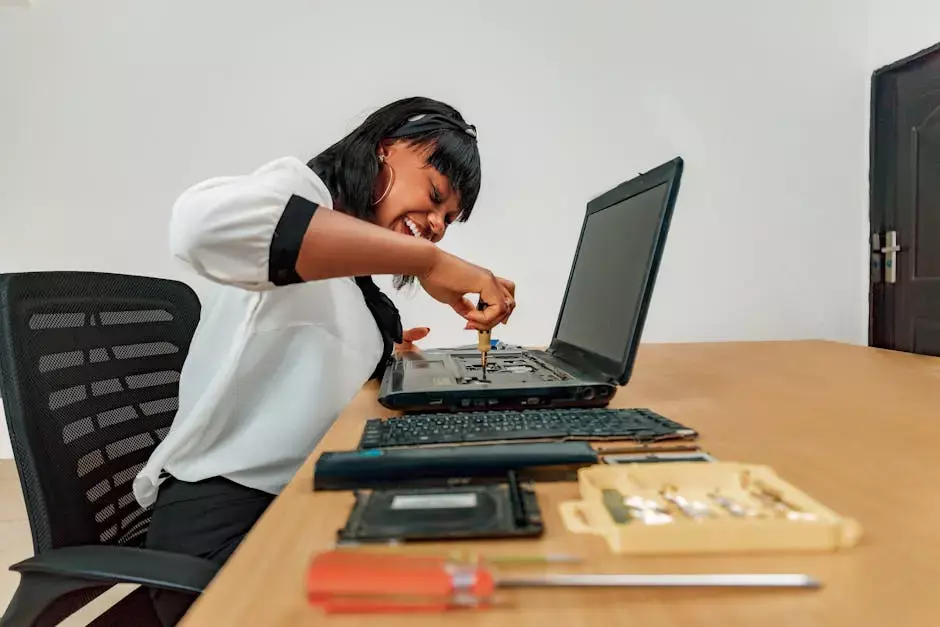
There is a tendency to think that IT maintenance matters less now than it used to.
Because so many businesses rely on cloud apps, newer devices, and subscription-based software, some people assume technology can more or less take care of itself. But in practice, regular IT maintenance still matters a lot.
It may look different than it did years ago, but the need has not gone away.
Businesses still depend on computers, user accounts, updates, security settings, backups, networks, and connected systems working together consistently. When those parts are neglected, the result is usually slower performance, more user frustration, more security risk, and more avoidable downtime.
Maintenance Is What Keeps Small Problems from Turning Into Bigger Ones
Most serious IT problems do not appear out of nowhere.
They usually start as smaller issues: a machine running low on storage, an update being skipped, a backup failing quietly, a system running old software, a device getting slower over time, or an account configuration drifting away from what it should be.
If those issues are noticed early, they are usually easier to fix. If they are ignored, they tend to become the kind of disruptions that cost real time and money.
That is why regular maintenance matters. It helps businesses catch problems while they are still manageable.
Security Depends on Ongoing Attention
Security is one of the clearest reasons maintenance still matters.
Threats change. Software gets patched. Accounts need review. Devices need updates. New risks appear through email, identity systems, browsers, cloud tools, and user behavior. A business that stops paying attention to those basics can become vulnerable without realizing it.
Regular maintenance supports security by making sure the routine defensive work is actually happening. That includes patching, endpoint health checks, account review, system cleanup, and keeping protective tools working the way they should.
Good cybersecurity is not only about buying the right products. It is also about staying disciplined with the basics.
Device Performance Does Not Take Care of Itself
Even with newer systems, endpoints still need attention.
Over time, laptops and desktops can become slower, less stable, or more frustrating to use due to software bloat, outdated components, storage problems, startup clutter, or unresolved update issues. Employees often work around these slowdowns longer than they should, which quietly reduces productivity.
Regular maintenance helps keep devices healthier and more usable. That matters because user frustration with day-to-day technology often starts long before anyone opens a ticket.
Backups Need Monitoring, Not Assumptions
Many businesses think they are protected because they have a backup product in place.
But the existence of a backup is not the same thing as backup confidence. If failures are not being watched, if retention is unclear, or if no one has thought through recovery expectations, the business may find out too late that the protection was not as complete as assumed.
Regular maintenance includes checking on backup status and making sure the environment is actually recoverable, not just theoretically covered.
Networks Still Need Care
Cloud-heavy businesses sometimes forget how much the network still matters.
If your internet is unstable, Wi-Fi is weak, firewall rules are messy, or core network hardware is underperforming, your users still suffer even if most of the business runs through cloud platforms. Slow connections, dropped sessions, bad call quality, remote-access problems, and inconsistent performance are all examples of issues that maintenance can help reduce.
Network problems are often blamed on "the internet" in a vague way, but many of them trace back to systems that simply have not been reviewed or maintained carefully enough.
Maintenance Helps IT Stay Predictable
Businesses usually do better when technology is predictable.
They want fewer surprise outages, fewer emergency repairs, and fewer situations where users lose half a day because something critical stopped working. Maintenance is one of the main reasons a business can move from a reactive posture toward a more stable one.
Instead of constantly being caught off guard, the environment gets more regular attention and fewer problems are allowed to build up unnoticed.
That does not mean everything becomes perfect. It means fewer issues turn into expensive surprises.
Final Thoughts
Regular IT maintenance still matters in 2026 because the business impact of neglect has not changed.
Systems still need updates. Devices still slow down. Security still requires attention. Backups still need oversight. Networks still create problems when they are ignored. The tools may be more modern, but the need for consistent care is still very real.
If your business wants fewer recurring tech issues, better system reliability, and stronger day-to-day support, AVS Technologies can help. If you want to review weak spots before they turn into downtime, request a free consultation.