
Employee onboarding and offboarding are often treated like HR tasks first and IT tasks second.
But from a security and operations standpoint, those transitions matter a lot more than many small businesses realize. Every new hire and every departure affects accounts, devices, permissions, email access, shared files, communication tools, and security controls.
When those changes are handled well, the business stays organized and people can work productively. When they are handled poorly, the result is often a messy environment with extra support issues, preventable security gaps, and accounts that no longer reflect reality.
That is why onboarding and offboarding should be viewed as core IT stability processes, not just administrative checkboxes.
Onboarding Affects the First Impression of IT
New employees usually form their opinion of company technology quickly.
If the laptop is ready, the accounts work, the email is set up correctly, access is clear, MFA is configured, and the person can start working without confusion, the business looks organized. If not, the first few days become a scramble of password issues, missing permissions, setup delays, and unnecessary frustration.
That early friction costs productivity and reflects poorly on the business internally.
Access Should Be Intentional from the Start
One of the most important parts of onboarding is giving new users the right level of access from day one.
Too little access slows down the employee and creates avoidable support tickets. Too much access creates unnecessary security risk and makes long-term cleanup harder. The goal is not simply to get the person logged in. The goal is to give them the access they actually need and nothing more.
That becomes especially important in Microsoft 365, shared drives, line-of-business apps, finance systems, and remote-access tools.
MFA and Endpoint Setup Should Not Be an Afterthought
New-user setup should include more than a username and password.
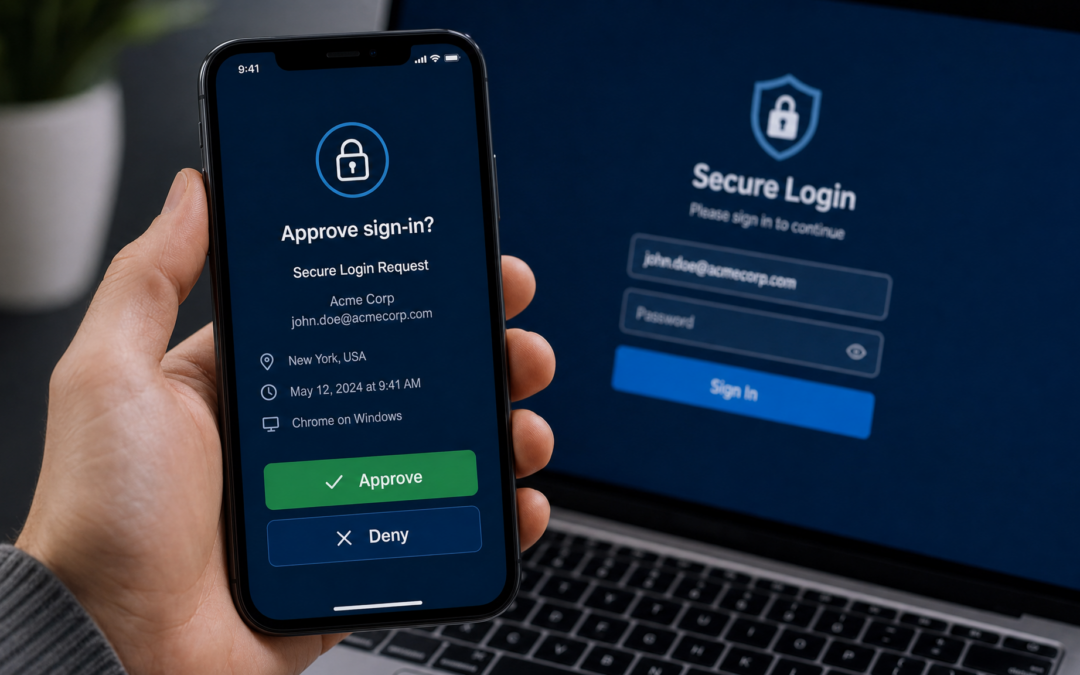
If the business relies on MFA, endpoint protection, device policies, remote access controls, or security baselines, those things need to be part of the onboarding flow. Otherwise the new user may start off with weaker protection than the rest of the environment or end up creating exceptions that remain in place longer than they should.
Strong onboarding helps the business stay consistent instead of allowing security standards to vary from person to person.
Offboarding Is a Major Security Control
Offboarding is even more sensitive.
When an employee leaves, the business needs to know which accounts should be disabled, which shared access points should be removed, which devices need to be returned, which email or file ownership needs to transfer, and whether any outside vendors or remote-access paths are affected.
If that process is delayed or handled casually, former employees may retain access longer than intended. Even if there is no malicious intent, that is still unnecessary risk.
Cleanup Prevents IT Sprawl
Poor offboarding also contributes to environment sprawl.
Old licenses remain assigned. Shared mailbox permissions linger. Group memberships stay in place. Unused accounts continue existing in Microsoft 365 or other platforms. Devices sit untracked. Over time, the business ends up with more access clutter, more uncertainty, and less confidence in who can reach what.
That makes security review and troubleshooting harder than they need to be.
Coordination Matters
Onboarding and offboarding work best when IT and the business communicate clearly.
If changes are communicated late, if responsibilities are unclear, or if nobody owns the checklist, mistakes become more likely. A clean process helps the business stay consistent whether the change involves one new hire or a larger staff transition.
That consistency improves both security and day-to-day reliability.
Final Thoughts
Employee transitions have a direct effect on security, productivity, and IT stability.
Good onboarding helps new hires start smoothly with the right accounts, access, and protection in place. Good offboarding reduces risk by removing access cleanly and keeping the environment organized. Both matter because user accounts are one of the most important parts of any business technology environment.
If your business wants cleaner onboarding, safer offboarding, and more reliable account management across Microsoft 365, devices, and security tools, AVS Technologies can help. We work with businesses that need practical IT processes that stay organized as teams change. If you want help tightening access and identity controls, request a free consultation.