
Remote access is now part of normal business operations for many companies.
Employees work from home, check systems while traveling, connect after hours, and rely on cloud platforms from multiple locations. The challenge is not whether remote access should exist. The challenge is how to keep it secure without creating so much friction that users start looking for workarounds.
That balance matters more than many businesses realize.
If remote access is too loose, the business creates unnecessary risk. If it is too frustrating, people may avoid approved processes, save passwords in unsafe ways, or pressure the company to weaken controls just to make the workday easier.
Good remote access security should protect the business without making legitimate work feel impossible.
Start with the Principle of Least Access
Not every employee needs access to every system from every location.
One of the best ways to reduce risk is to make remote access more intentional. Users should have access to the tools, systems, and data they actually need, rather than broad permissions that are simply easier to hand out.
That reduces exposure and makes it easier to manage security decisions over time.
MFA Should Be Standard
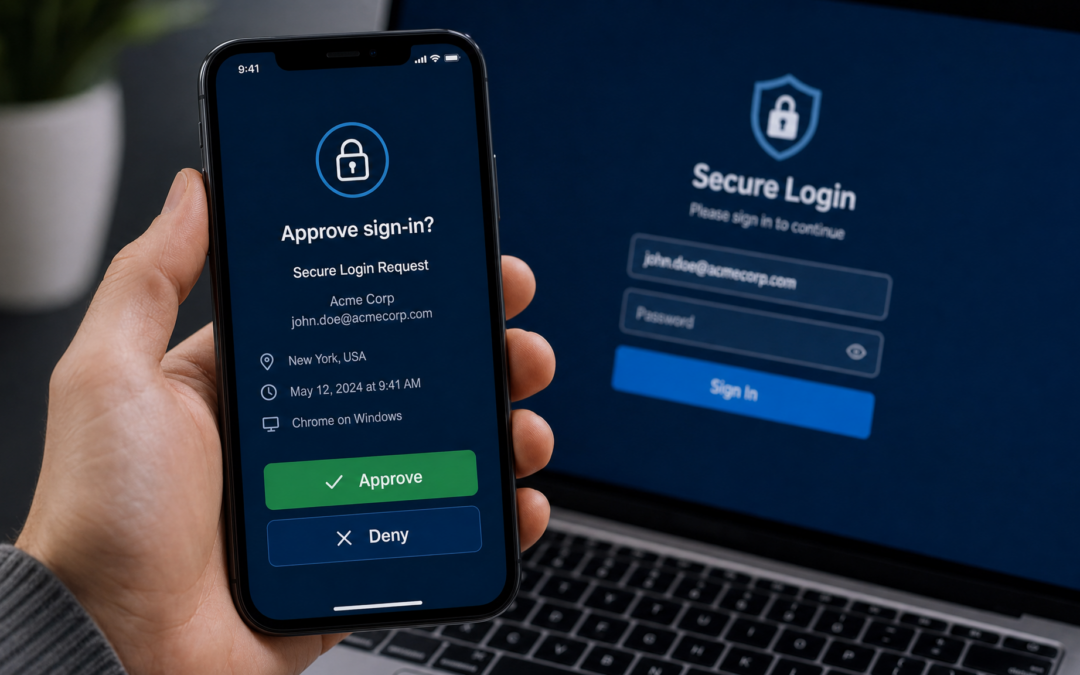
If remote access depends on usernames and passwords alone, the business is taking unnecessary risk.
Password reuse, phishing, weak password hygiene, and credential theft remain common problems. Multi-factor authentication helps reduce the chances that a stolen password immediately turns into a larger compromise.
For small businesses, this is one of the highest-value security improvements available because it addresses a very common attack path without requiring a full security overhaul.
Approved Access Methods Matter
Remote access should happen through methods the business understands and supports.
That may include secure VPN access, properly configured Microsoft 365 services, approved remote-support tools, protected admin portals, or other access workflows that are designed for business use. Problems start when employees rely on ad hoc tools, old remote-desktop exposure, or personal workarounds that were never meant to be part of the security model.
Standardizing the access path helps the business stay safer and makes support easier.
User Experience Still Matters
Security controls work better when they are realistic.
If login flows are confusing, if remote access breaks often, if the VPN is unreliable, or if MFA prompts feel chaotic, employees become frustrated fast. That frustration can quietly turn into bad habits, support tickets, and pressure to loosen protections that should stay in place.
A better approach is to design remote access around how the team actually works. Secure access should still be practical, consistent, and reasonably easy to use from approved devices.
Device and Account Hygiene Are Part of Remote Access Security
Remote access is not only about the connection itself.
The device being used matters. The account being used matters. Patch levels, endpoint protection, local security posture, and account management all affect whether remote access is creating a safe extension of the business or just moving the risk somewhere else.
That is why remote access security should be viewed as part of the broader environment instead of a single isolated setting.
Review and Cleanup Should Happen Regularly
Remote access tends to get messy over time.
Former employees may still have old permissions. Temporary vendor access may linger. Exceptions that were created quickly may never get revisited. A user who changed roles may have access they no longer need.
Regular review helps clean that up before it becomes a bigger exposure problem.
Final Thoughts
Secure remote access should not force businesses to choose between protection and productivity.
The best approach uses practical controls such as MFA, approved access methods, cleaner permissions, healthier devices, and regular review so employees can work effectively without exposing the business unnecessarily.
If your business wants safer remote access without turning every login into a daily battle, AVS Technologies can help. We work with businesses that need secure connectivity, better access control, and support that fits remote and hybrid work in the real world. If you want to review remote access, MFA, or firewall policies, request a free consultation.