
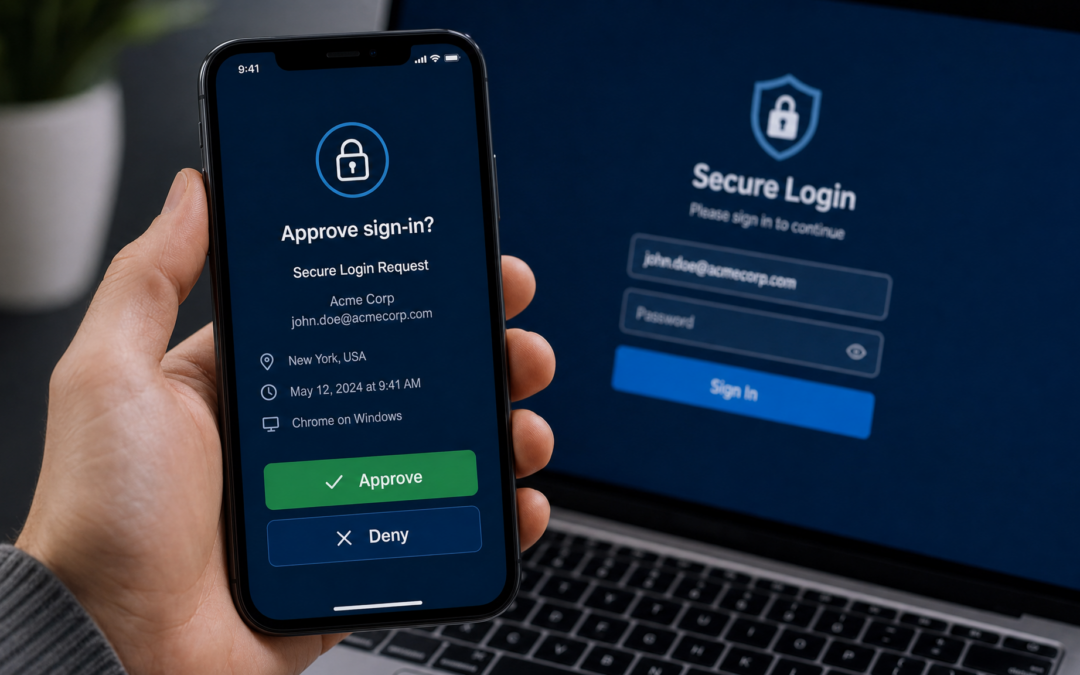
Small businesses sometimes assume that once MFA is turned on, the user problem is mostly solved.
MFA absolutely helps, and businesses should use it. But strong login protection does not automatically fix risky behavior, weak judgment, or every kind of social engineering attempt. People still play a major role in how well business security holds up day to day.
That is why security awareness training still matters.
MFA Helps, But It Does Not Replace Awareness
MFA is one of the most useful security controls a business can add.
It makes stolen passwords less valuable and reduces some common attack paths. That is a big improvement. Still, businesses can get a false sense of safety if they start treating MFA as a complete answer.
MFA helps protect accounts, but it does not teach users how to recognize suspicious messages, unsafe links, fake login pages, or pressure tactics.
Attackers Still Target Users Directly
Many attacks still depend on user behavior.
Someone clicks a fake invoice. Someone approves a push notification too quickly. Someone enters credentials into a lookalike page. Someone opens an attachment that seemed believable under time pressure. None of those problems disappear just because the business has an extra login prompt.
Training helps users slow down and recognize what does not feel right.
Awareness Supports Better Tool Use
Security awareness is not separate from the rest of the stack.
It helps people use the rest of the stack better. Users are more likely to understand why MFA prompts matter, why device updates should not be postponed forever, why suspicious browser behavior needs reporting, and why unusual account warnings should not be ignored in environments using endpoint protection and Microsoft 365.
That makes awareness training a support layer for the tools the business already pays for.
Good Training Should Stay Practical
Awareness training does not need to be dramatic to be useful.
For small businesses, the best training is usually simple and practical. Focus on common phishing patterns, fake file-share notices, invoice scams, credential prompts, business email compromise tactics, and what employees should do when they are unsure.
The goal is not to turn everyone into a security analyst. It is to help normal users pause before they make a preventable mistake.
Better Habits Reduce Damage
Every business will eventually deal with something suspicious.
The difference is often how quickly users notice it, report it, and avoid making it worse. Better habits can stop a bad message from becoming a compromised account, a dangerous download, or a larger incident that affects the rest of the team.
That is one reason awareness still matters even in environments with stronger technical controls.
Final Thoughts
Security awareness training still matters even with MFA because user decisions remain part of the security picture.
MFA reduces one kind of risk, but awareness helps employees recognize suspicious activity before it turns into a bigger problem.
If your business wants stronger protection across users, accounts, and devices, AVS Technologies can help. We work with businesses that need layered security that includes better user habits as well as better tools. If you want to tighten both training and technical controls, request a free consultation.